

The Case for Not Explaining Ourselves
How self-surveillance and virtue signaling prevent us from meaningful change.
A portion of my practice as a narrative therapist is to listen for core beliefs. I consider the language used in session carefully. I wonder what it means about the person, how they see the world, and how they see themself. This is a muscle that does not turn off when I talk with my friends, go to the bar, walk through the grocery store, or scroll the internet. I can’t help but notice, everyone is explaining themselves.
I am thinking of a very specific kind of explaining. It’s the asterisk that says: “I am aware [insert corporate or public entity funding death] is bad, but I am doing it anyway”. It comes after wanting to share a song, or a purchase, or a news bite. It’s the tensing of the voice and the pressured release of, “I’ve still got to change my streaming service” slipped in quickly between thoughts expressed so as to leave little room for it to be acknowledged. It’s almost as if we are calling out ourselves before someone else can. Naming it before someone sees us as bad or corrects us.
It’s pretty terrible to be told something you already know: you shouldn’t [use / buy / have] that thing because it comes from people who fund [violence / genocide / oppression]. So, we explain (surveil) ourselves in real time. As if we have been virtue signaled so many times, we must also prove our moral goodness and quality of person in the most mundane of conversations. Has constant observance of virtue signaling or performing it ourselves rewired and formed us to be so hypervigilant of how others perceive whether we are good people or not? I don’t have the answers for this. I am writing from a place of wonder rather than a fully formed idea.
This may be an unpopular sentiment to share, but I am tired of it. Not tired of it in an angry way. Tired of it in a sad way. It seems we are all so afraid of being in trouble with each other. Anxious to be judged. The narrow space of existing between two ridged and opposing ideals is tense. Restrictive. I understand that there are people who are asking at this very moment, “am I still a good person if I have a subscription to Sp*tify?”
Probably, because truly bad people don’t wonder if they are bad or not. At least not authentically. What is bad, or rather what feels bad, is if we know something and do nothing about it. I wonder: What can we do about it rather than explaining ourselves to one another? How can reduce performativity and increase action? If you’re like me, that can be the rub. Action is hard when immobilized by fear of making the wrong decision. Instead of finding ourselves in situations where we’re slipping into every day conversation our awareness of our engagement in corrupt systems, can we just let ourselves be okay with the slow process it takes to make a change?
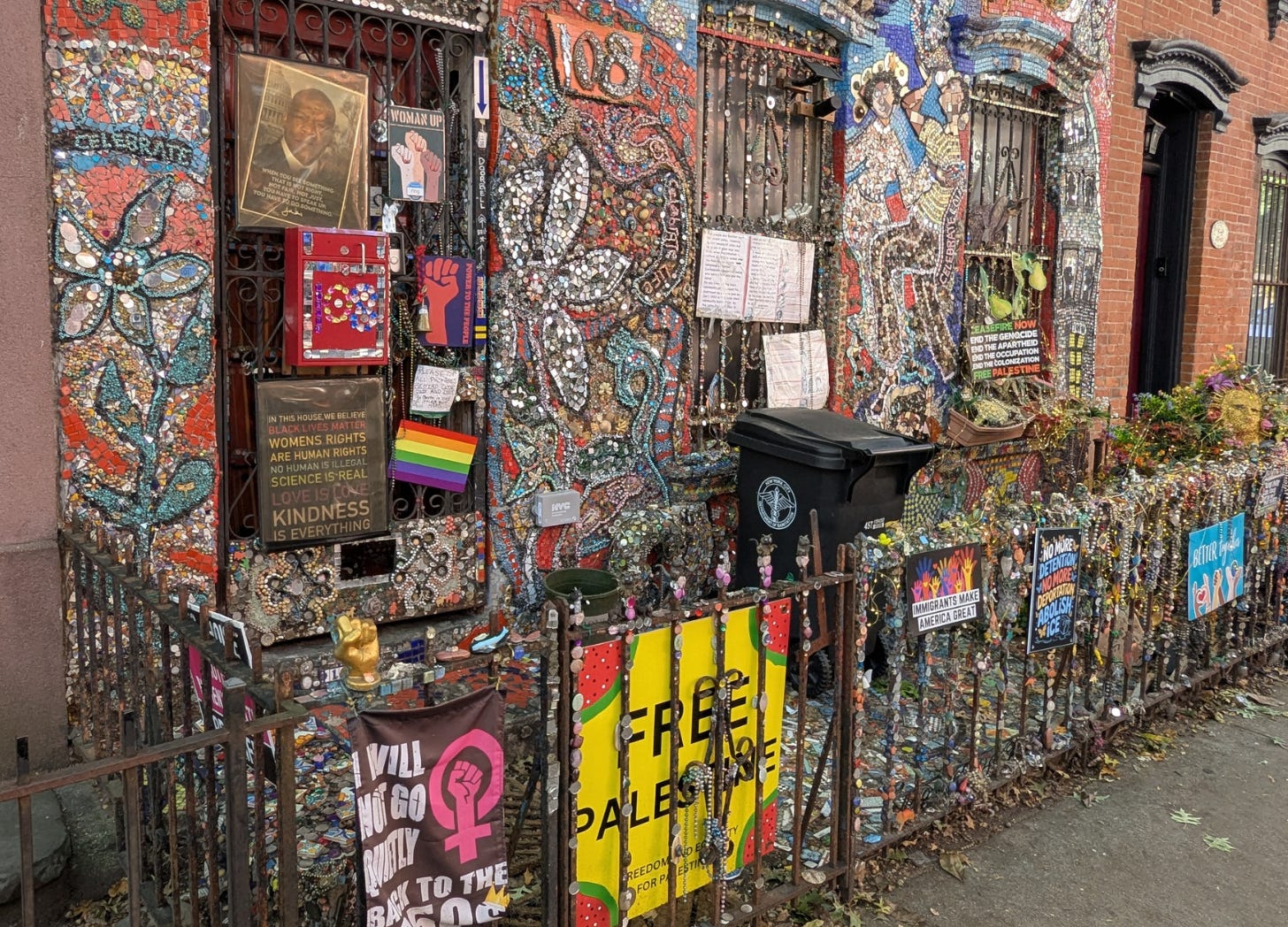
The continuous bombardment of bad news reminds me of Alice Sparkly Cat’s Postcolonial Astrology where they write, “there is no ethical existence under capitalism”. They identify that postcolonial is a trivial term, as we are not post colonization. We are in it. Despite some of our identities and attempts to decolonize ourselves or live radically against a capitalist state, we are here. Because we are here, specifically in the U.S. where I live, we are occupying land. We are paying taxes that are used for causes, systems, and materials that many of us do not personally approve of. We buy into food, clothing, and product systems that harm land, mistreat animals and humans alike. We use technology that has social and environmental costs we are only beginning to understand. The list of contributions we make to harm, just be existing, is long. It could be endless.
What feedback do we get from social media spaces and news outlets about how perfect we need to be in living our values? What do we do when institutions and corporations use the same technology we use to advertise messaging that attempts to neutralize existing harm and/or incites further violence? Are we really out here creating a plan of action to buy products that content creators are insisting are better than the ones with brand names linked with corporations that are funding genocide? Because if you’re like me, you vet that list of "better products” only to discover those better products are also under an umbrella brand of a larger corporation that is also contributing to the same or worse violence.
Perhaps it is that every corner I turn, there is no perfect way to be a consumer. I’m not the best person to talk about consumerism, as I am not someone who has strong financial power or excess income. I do believe that I feel this tension in trying to be perfect, in surveilling myself so as to not get caught being wrong or bad or doing harm, and I wondered if sharing that with you might let your shoulders down for a moment.
I ask myself these questions to self-reassure that I am figuring it out:
Am I doing what I can within my capacity?
Am I willing to make reasonable changes that match my financial circumstances?
Am I open to hearing about new ways to reduce harm through spending and engagement?
Am I willing to share knowledge, education, and information with my loved ones in a non-punitive, supportive way?
How many times am I willing to say, “I know I need to change “X” service I use”(for example) before I sit down and do the short research of identifying a different service?
Am I helpful, kind, and supportive interpersonally in ways that reduce harm caused by other forced-participations (e.g. paying taxes)?
There are times when we must explain our actions and behaviors. Explanation, though, can look like excuse if not executed from empathy and accountability. I believe this type of explanation is due for specific harms, including interpersonal harm and community harm. Some of us are too disabled, too poor, too resource limited to change every single way in which we live: it is expensive enough to be alive. Folks do not need punitive social repercussions, as little as judgement, for ordering necessary items (medical supplies, comfort items, food, etc.) from the big A. They need better options. We need better options. We deserve better options.
On the note of interpersonal harm, I remember Hanif Abdurraqib’s post on July 26, 2023, after completing his New Yorker piece about Sinead O’Connor. In the post, Abdurraqib writes:
I am a broken record with this, but I truly encourage people to look within and ask yourself hard questions about your relationship with interpersonal cruelty. How you might enact it, how the enacting of it is serving that desire to see people, often strangers, punished. Structural cruelties are not only accelerating but new ones are accumulating, adapting. Multiple apocalypses are intersecting. That’s the reality of our living. Interpersonally, people have to demand more of themselves in the midst of ongoing, accumulating crisis.
I wonder how, instead of embodying the external demand to be perfect in our consumerism or in our navigation of oppressive systems, we can demand ourselves to be better interpersonally. To extend our capacity for care beyond ourselves. To be patient as we listen to our loved ones explain themselves. To meet people with compassion as they fumble, as we have, through figuring out how to be a good person, as Abdurraqib says, in the midst of multiple intersecting apocalypses.
The next time someone says to me something like, “I saw this great article in the New York Times—and I know I know, I need to unsubscribe but I love the games,” I might say, “Yes, it is hard to know something we have enjoyed is harmful. If you want some recommendations for other publications with games, I can share a few,” leaving it up to the person to take action without judgement.
I invite thoughts, perspectives, and other wonderings to help me shape this observation further. I feel deeply that having to explain every little part of our lives is one of many things that can make us miserable. There’s no ease in that. I also know there’s no ease in significant human suffering, which large populations of the world are doing in Palestine and Sudan and beyond. Even here in the United States, where I live, people are starving and losing their homes and medical care. There is no ease. Why make anything more challenging for ourselves than we need to?
I want to lastly consider the idea of harm reduction. If we can reduce, rather than eradicate / cease, why not start there? I don’t want to live in an all or nothing world and I don’t believe that imperfect approaches aren’t helpful in some way. What I do know is that if you make the task or demand too big, too scary, too inconvenient, a good amount of people are not going to do it. What if we made it smaller? Doable? Accessible?
What are you doing to make a difference in your world?

I really love this. It's something that I've been noticing more and more, and I really resonate with this! No coherent thoughts to add, just that giving each other space in our interpersonal relationships to just be feels much more important than not buying this thing or not subscribing to something. I always appreciate your writing!